Why one client's bold colour choice became one of our favourite builds to date.
"I want it dark. Not navy. Not grey. Dark."
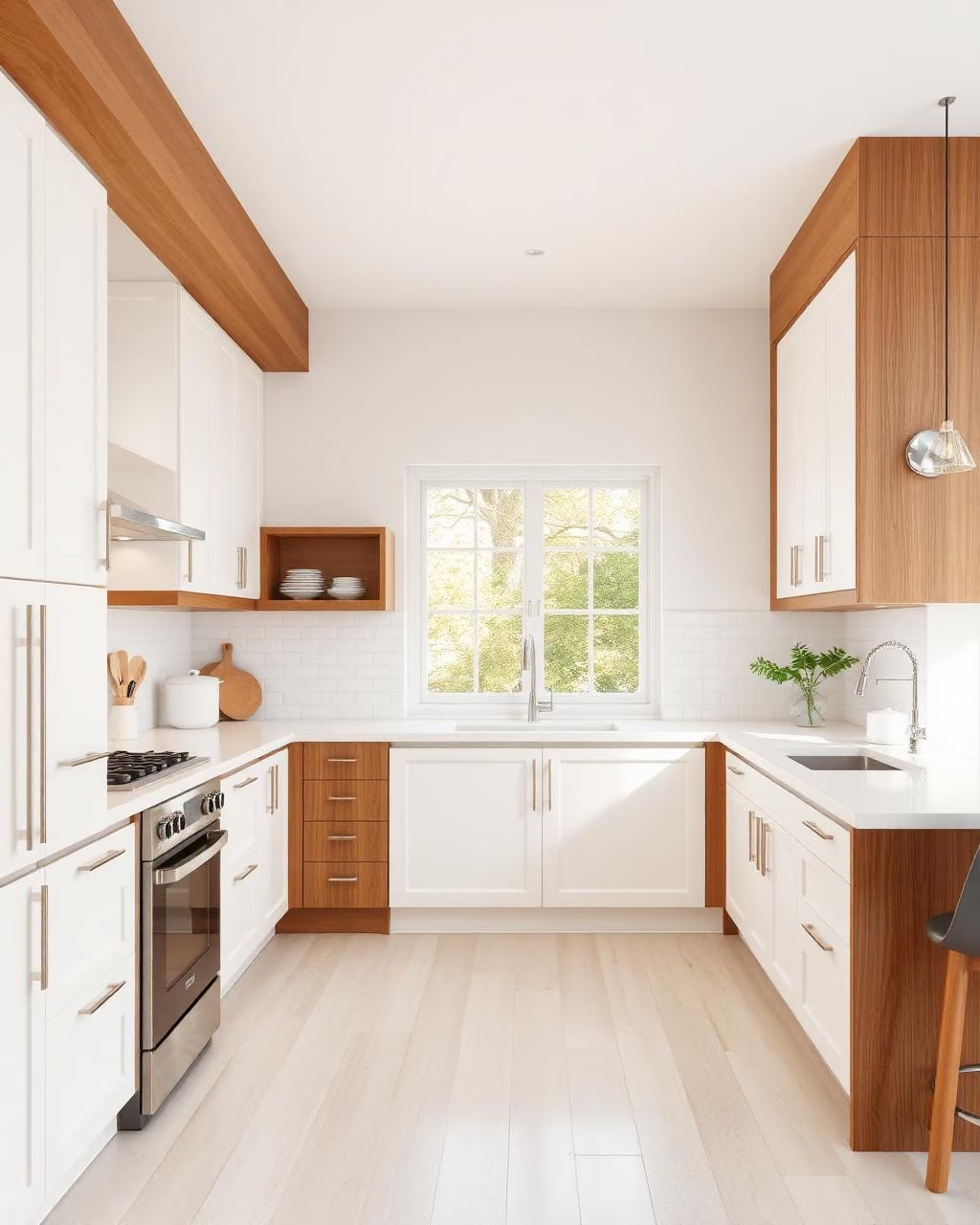
That was the first sentence Aminata said to us, sitting on a folding chair in what would eventually become her kitchen. The room was a shell at the time — bare blockwork, a single bulb hanging from a wire, the smell of fresh plaster. She had a folder of clippings, mostly from European magazines, almost all of them showing pale Scandinavian kitchens with white oak floors and brass taps.
"But I want the opposite of these," she said. "I want my kitchen to feel like the inside of a really good restaurant. Moody. Confident. Not afraid of itself."
We loved her immediately.
Why dark kitchens are harder than they look
Designing a dark kitchen sounds straightforward — pick a dark colour, paint everything that colour, done. In practice it is the hardest brief we get. Dark surfaces show every fingerprint, every dust particle, every smear of cooking oil. They absorb light, which means lighting design becomes a structural decision rather than a finishing touch. They make a small room feel smaller and a large room feel cavernous.
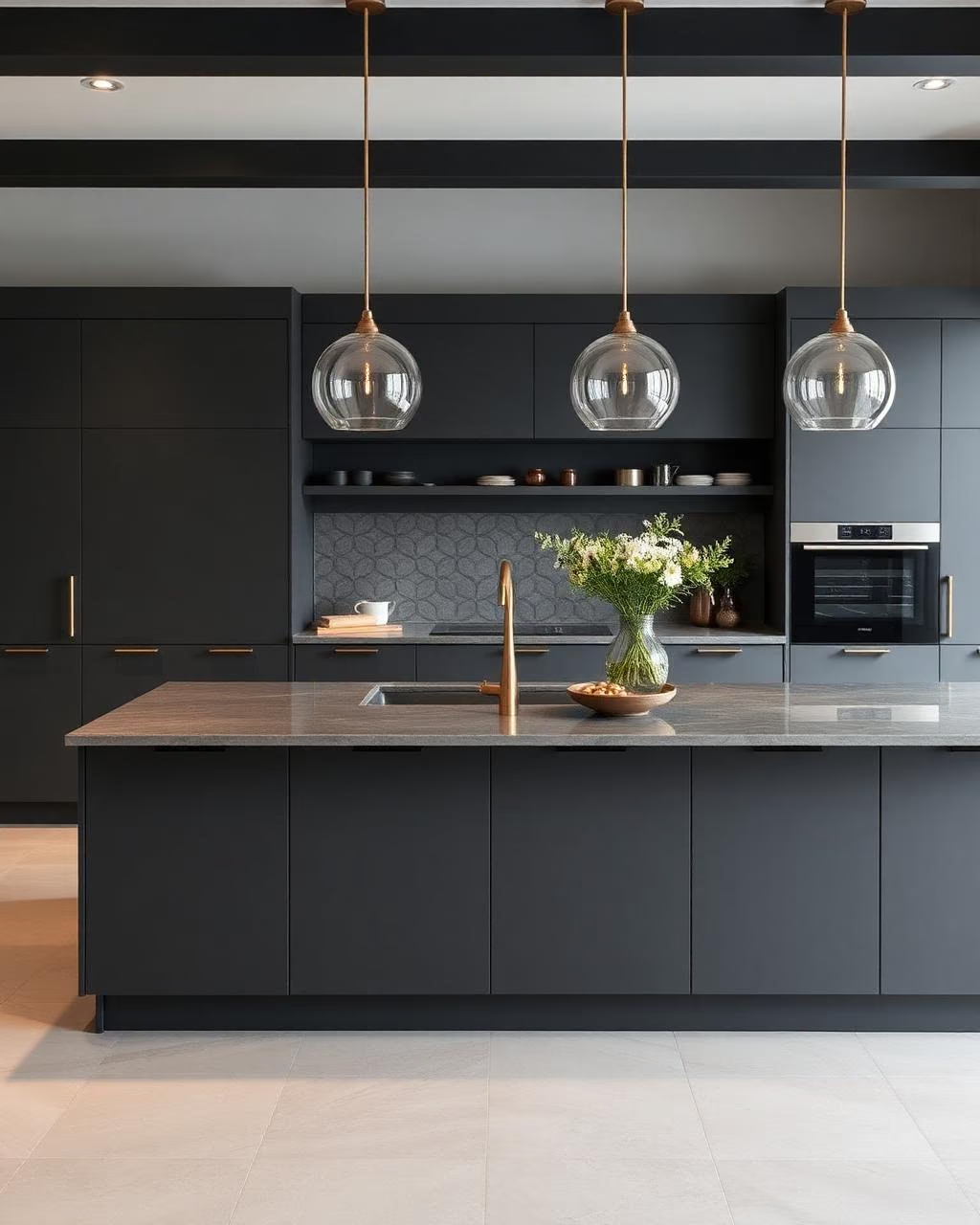
For Aminata's kitchen we landed on a custom charcoal that reads almost-black in shadow and a deep graphite in direct sun. We mixed it with our lacquer supplier over three afternoons until we had a finish that didn't go flat under the workshop lights. The doors got six coats, hand-sanded between each.
The brass moment
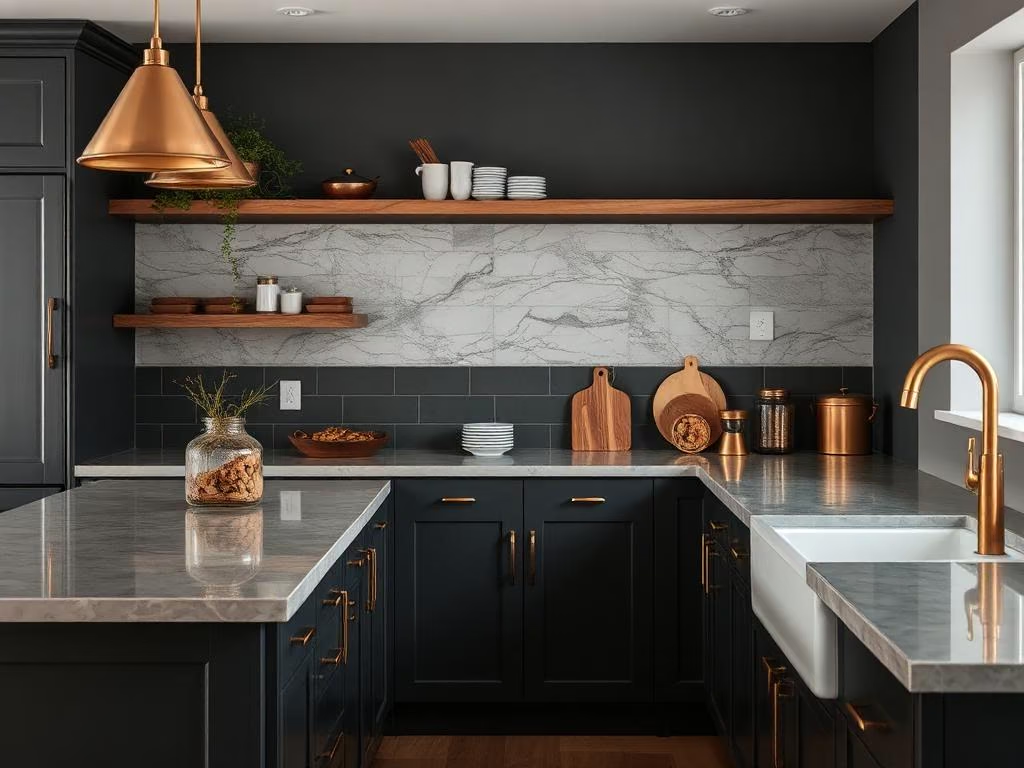
Here is the trick we learned on this project: a dark kitchen needs one warm note, and that note has to be unapologetic. We chose unlacquered brass — handles, tap, pendant lights over the island, and a thin trim along the underside of the upper cabinets. Unlacquered means the brass will tarnish over time, develop a patina, get richer. Aminata loved that.
Against the charcoal, the brass glows. It catches morning light from the eastern window and turns the whole room gold for about twenty minutes a day. We've stood in that kitchen at 7 a.m. and watched it happen. It is the closest thing to magic we get to make.
What surprised us
Two things. First, the room actually feels bigger than it did with the bare white walls. The dark cabinets recede in a way pale ones don't, and the eye reads the space as deeper. Second, Aminata cooks more than she ever did. She told us last month she's started hosting Sunday lunches for fifteen people. "The kitchen makes me want to be in it," she said.
That, in the end, is the whole point. A kitchen isn't a colour or a style — it's a room you want to be in. Aminata's room is dark, confident, slightly theatrical, and completely her. We're proud of it.